Tackling steep gradients with heavy machinery isn’t for the faint of heart, which is exactly why our heavy duty round baler is engineered from the ground up at our specialized Dutch factory. As a globally recognized premium farm baler supplier and dedicated machinery manufacturer, Ever Power focuses heavily on integrating advanced active braking and low-center-of-gravity chassis designs to keep your harvest rolling safely on unpredictable slopes. We’ve seen too many experienced operators holding their breath on a fifteen-degree incline, terrified that the massive roll they just ejected is going to act like a runaway boulder heading straight for the valley floor. The trick is building anti-roll geometry and kinetic dampening straight into the base frame of the machine, rather than expecting the tractor driver to magically compensate for dangerous weight shifts using only their brake pedal.
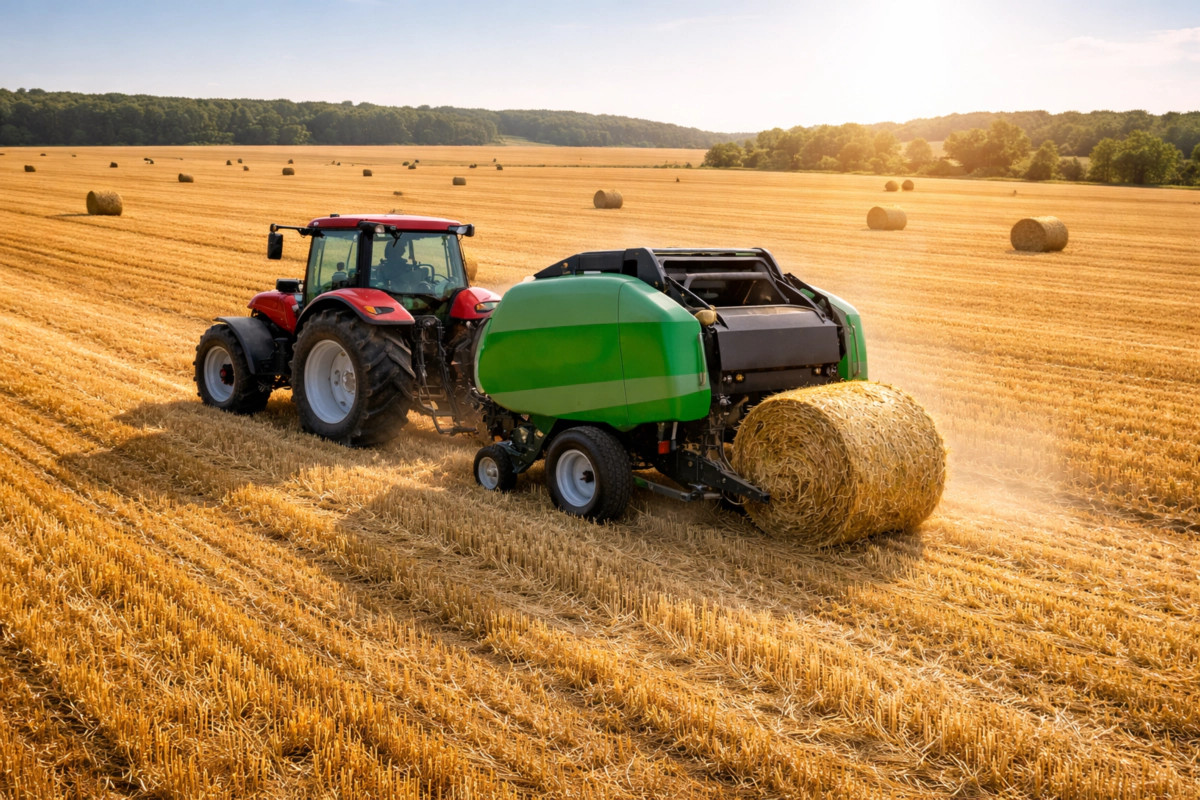
In our experience spending years testing prototypes in the rugged foothills of Europe, most operators don’t realize just how violently the center of gravity shifts the moment that rear tailgate swings open. If you are parked on a sidehill and your track width is too narrow, that sudden upward and backward shift of a heavy steel door (combined with the shifting weight of a high-moisture silage bale) can effortlessly lift your tractor’s rear uphill wheel right off the dirt! It’s a terrifying scenario. To combat this, our engineering team completely redesigned the internal roller layout, dropping the heaviest steel components well below the axle line. By widening the wheel track and utilizing massive low-pressure flotation tires, we ensure the machine maintains an aggressive, unyielding bite on the soil, even when you are dragging it across wet, slippery morning dew.
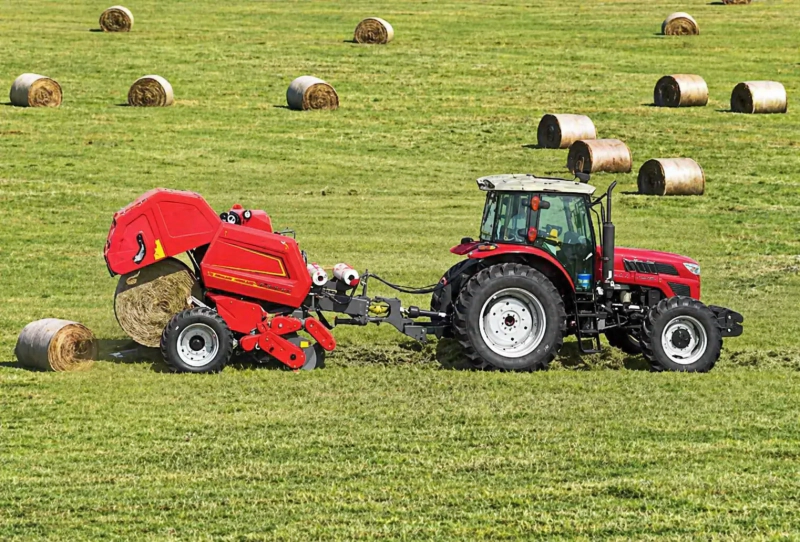
Mountain-Grade Engineering: Stability Specifications & Calibrations
Surviving extreme hillside agriculture requires tolerances and geometries that standard flatland machines simply do not possess. Here are the precise mechanical metrics that give our slope-ready models their legendary grip and operational safety.
| Critical Safety Module | Factory Configured Standard | Real-World Hilly Terrain Advantage |
|---|---|---|
| Maximum Safe Operating Incline | 22 Degrees Lateral / 32 Degrees Longitudinal | Vastly exceeds the standard 15-degree industry redline, providing incredible driver confidence. |
| Chassis Track & Tire Profile | 2.45m Wide Stance / 500/50-17 Flotation | Prevents shear-sliding on damp grass while stopping downhill wheel sinkage. |
| Tailgate Hydraulic Lock Valve | Dual Bi-Directional Pilot Operated Checks | Freezes cylinder movement instantly to prevent gravity-induced tailgate slamming. |
| Dynamic Pickup Floatation | 2.2m Independent Suspension Linkage | Hugs extreme ground contours, preventing the tines from digging trenches into the hillside. |
Six Ways We Engineered Fear Out of the Equation
When you are bouncing across a ridgeline, peace of mind is just as valuable as fuel efficiency. We spent an enormous amount of R&D budget perfecting these six specific structural upgrades to ensure your rig stays exactly where you put it.
Ultra-Low Gravity Architecture
By moving the primary transmission block and heavy compaction rollers closer to the soil line, we’ve created a machine that resists lateral torque even when striking hidden rocks on a steep sidehill.
Active Independent Axle Braking
Tied directly into your tractor’s pneumatic or hydraulic stopping system, our heavy-duty brakes pulse automatically to prevent the baler from pushing your tractor into a deadly jackknife on downward slopes.
Bale Discharge Retarder Bar
We feature a specially tensioned rear drop-ramp that applies reverse friction the moment the bale hits the ground, effectively killing its forward momentum so it stays exactly where you dropped it.
Articulated Hitch Ring
A heavy forged swivel hitch allows for massive three-dimensional torsion angles between the tractor and the implement. You can navigate sharp terrace drop-offs without snapping the drawbar pin.
Live ISOBUS Inclinometer
A multi-axis digital sensor feeds live tilt data directly to your cabin monitor. If you approach the physical tipping threshold, the system sounds an aggressive alarm before you make a fatal mistake.
Tilt-Compensated Gearbox Oil
Standard gearboxes starve for oil when tilted, but our internal channeling system ensures gears and bearings stay fully bathed in synthetic lubricant even when operating at a constant 20-degree pitch.
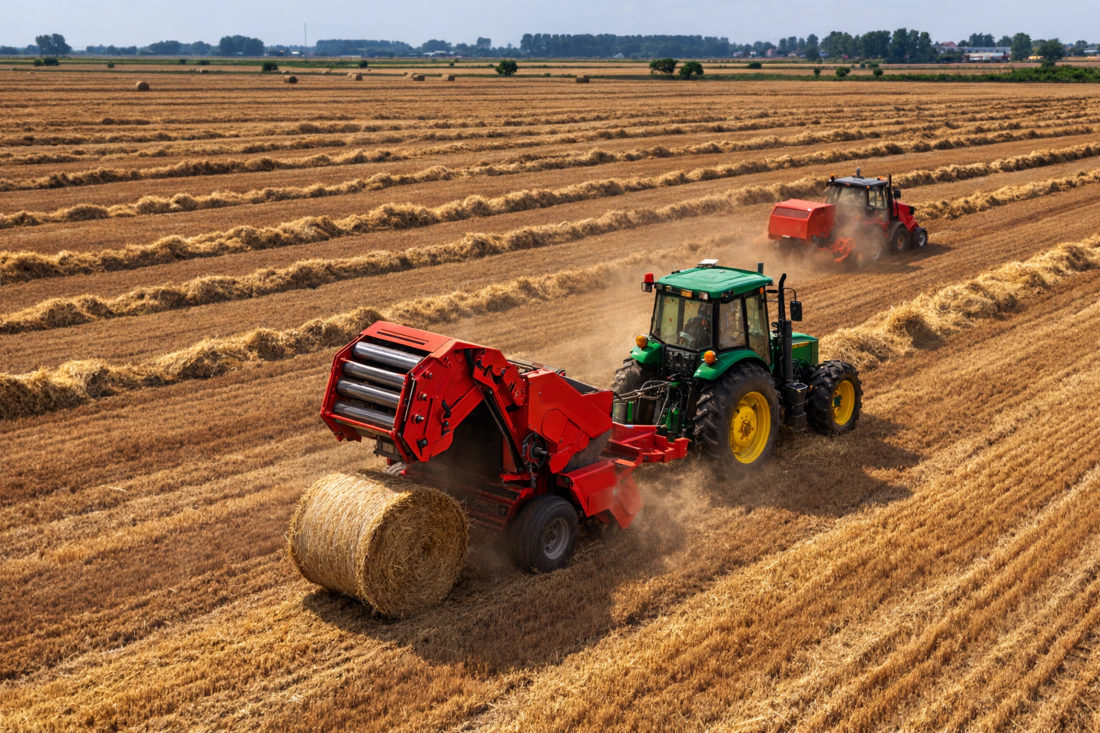
Look Past the Horsepower: How to Spec for Slopes
Choosing the right setup for mountain terrain isn’t just about glancing at a brochure and picking the model that matches your tractor’s horsepower. You have to pull out a tape measure and check your tractor’s rear wheel track. If your baler’s wheelbase is significantly narrower than your tractor’s footprint, you will suffer from severe “inward tracking” on hillsides—similar to how a semi-trailer cuts the corner too tight on a sharp turn. From what we’ve seen investigating machinery accidents globally, the safest configuration matches the implement track width as closely as possible to the tractor, creating a solid, uniform line of gravitational defense against sliding.
Another critical factor that most folks ignore is PTO power loss during heavy climbing. When your tractor is clawing its way up a steep grade, the engine uses a massive chunk of its torque just to lift its own weight, leaving significantly less power available at the PTO shaft for the baler. If you work in the hills, you absolutely must opt for our hydraulic knife-bank disconnect feature. When the machine starts to lug on a climb, you can drop half the chopping knives right from the cabin monitor, instantly reducing the horsepower demand and preventing a massive, frustrating stall-out mid-hill.
From Wet Alpine Grass to Dry Terraced Straw
This machine wasn’t built to just look pretty on flat, irrigated demonstration fields; it was born for the unforgiving, undulating landscapes of high-altitude farming. When you are pushing through heavy, wet silage grass at 60% moisture, the shifting weight inside the chamber exerts tremendous diagonal stress on the chassis framing as you traverse a slope. Lighter machines twist and warp under this load, eventually leading to blown bearings. By heavily gusseting the side walls, we’ve created the undisputed best round baler for hilly terrain, ensuring the chamber stays perfectly cylindrical no matter how much the internal crop tries to lean downhill.
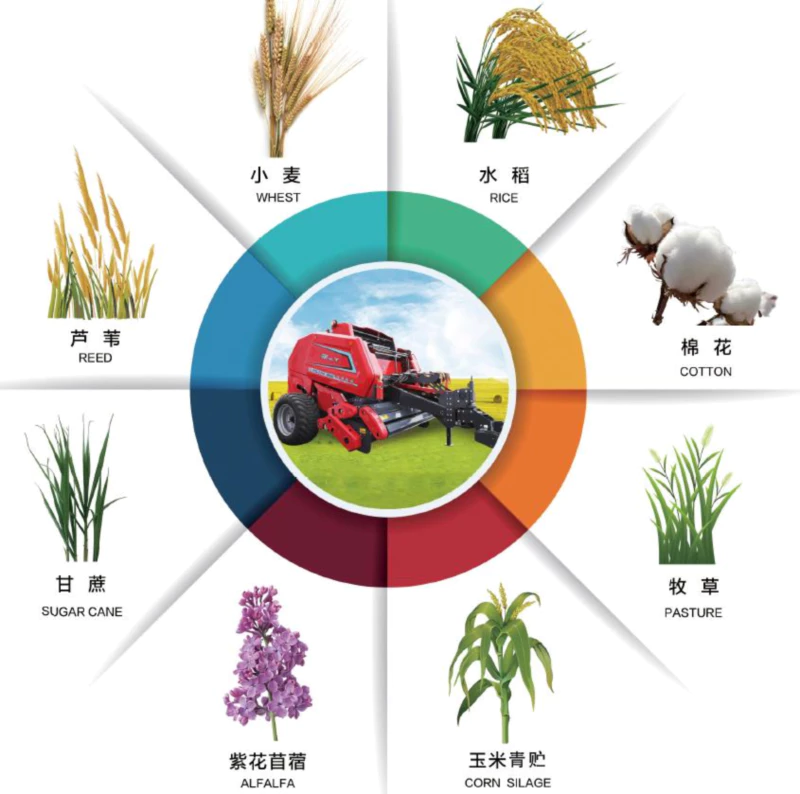
When you transition to working on steep, narrow terraced fields, another hidden problem emerges: gravity messes with the net wrap system. If the baler is leaning sharply forward or backward, traditional net spreaders pull unevenly, leaving fuzzy, unwrapped shoulders on your bales. To fix this, our factory utilizes an active, gravity-compensated tensioning bar that mechanically adjusts the wrap pressure based on the machine’s tilt angle. It guarantees a flawless, edge-to-edge wrap, ensuring your bales survive the rough, bouncing trip down the mountain on the transport trailer.
Voices from the Edge: Global Operator Feedback
Slick marketing brochures don’t mean a thing when your tractor is sliding sideways toward a ditch. Let’s hear from the folks who trust their lives to our iron every single harvest season.
“We run a custom outfit in the Austrian Alps. The meadows here often hit 18 degrees, and the ground is littered with hidden glacial rocks. Using our old machine going downhill was a nightmare; the baler constantly tried to push the tractor sideways. We upgraded to Ever Power’s heavy duty rig specifically for the active hydraulic braking axle. It is absolutely planted. The bale retarder bar is also brilliant—the bale drops and stays right there, instead of rolling a quarter mile into the river below.”
— Hans Hofer, Alpine Forage Contractor (Tyrol, Austria)
“Farming the Appalachian foothills means dealing with incredibly narrow terraces and hairpin turns at the end of every row. I was worried a big European-style baler would be too clumsy, but the Dutch engineers set us up with an articulated swivel hitch. The machine tracks perfectly behind my rear tires, and the wide-angle PTO joint hasn’t chattered once, even when I am jackknifed on a steep turnaround. Phenomenal build quality.”
— Caleb M., Multi-Generational Hay Farmer (West Virginia, USA)
Full Structural Integrity: Heavy-Duty Cylinders, Gearboxes & PTO Assemblies
The harsh reality of mountain agriculture is that if a single hydraulic seal blows out on a slope, it can cause a catastrophic accident. Because we refuse to cut corners by sourcing cheap third-party parts, Ever Power machines our own heavy-duty hydraulic cylinders and primary gearboxes in-house. These units undergo intense stress testing to ensure that the tailgate lock cylinders absolutely will not bleed down or shift when holding back a 1,500-pound grass bale on a steep incline.
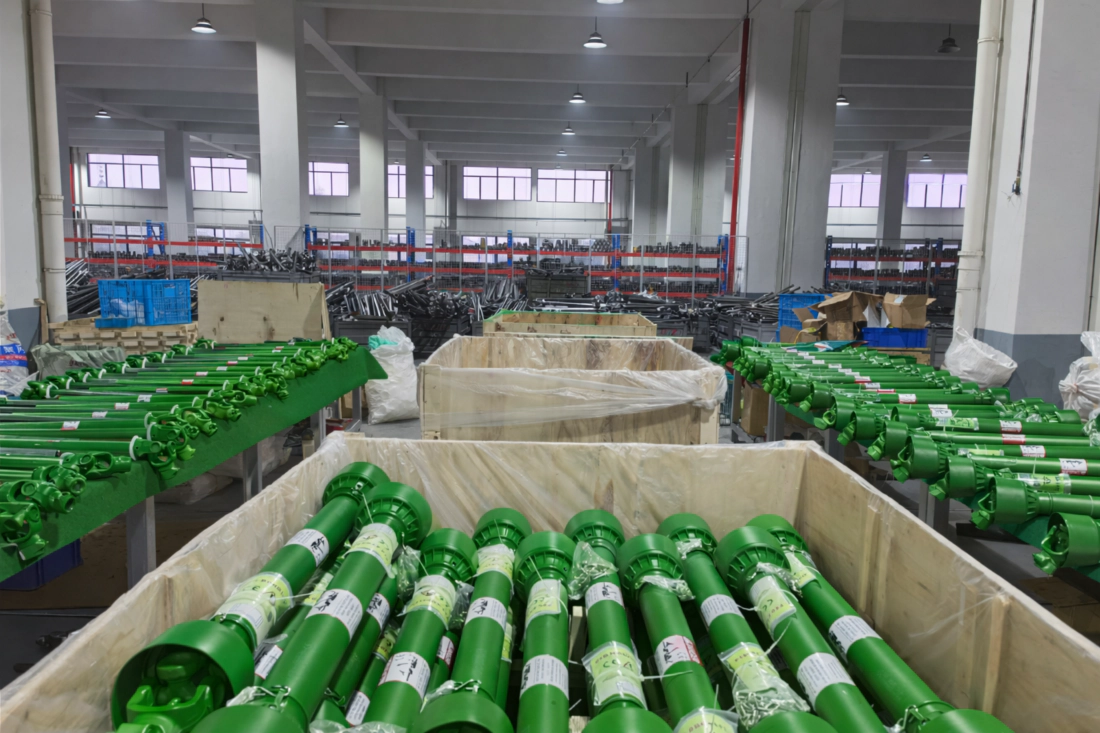
To prevent the severe driveline vibrations that occur when turning sharply on terraced hillsides, we supply specialized wide-angle PTO shafts featuring multi-plate friction clutches. Whether you are running a classic mechanical tractor or a modern ISOBUS-equipped workhorse, our Dutch engineering team can factory-calibrate the spline counts and gear ratios to ensure your machine is field-ready the moment you pull it off the flatbed. Dive deeper into our manufacturing philosophy and history over on our about us page.
Direct From the Engineering Desk: Your Slope Operation Questions Answered
Operating on steep terrain understandably generates a lot of anxiety and technical questions. Here are the unfiltered, straightforward answers from our senior application engineers.
How much does a commercial round farm baler cost for slope fields in Europe when buying direct from the supplier factory?
The exact landed price for our mountain-spec balers varies depending on whether you require the pneumatic active braking axle and the integrated ISOBUS digital inclinometer package. However, by purchasing directly from our Dutch manufacturing hub, you completely bypass the heavy dealer markups typically associated with specialized European alpine machinery. Click the action button below, and our team will generate a precise, localized freight quote for your specific terrain within 24 hours.
Where to find a durable mountain baler manufacturer with automatic braking systems capable of safe round baler operation on slopes?
You are looking right at the source! Ever Power is one of the few global manufacturers that builds heavy-duty chassis structures explicitly designed for steep alpine and terraced environments. We don’t just sell standard machines with slightly wider tires; we engineer full active hydraulic braking axles and low-gravity gearboxes right at our factory, shipping these highly specialized safety rigs to contractors worldwide.
What causes the bale density sensor to read unevenly when baling on a 15-degree sidehill, and how can I fix it?
This is a classic gravity-bias issue. When traversing a slope laterally, the crop naturally tumbles and packs denser against the downhill side of the chamber, causing uneven sensor readings and lopsided bales. The trick is to dive into your cabin monitor settings and activate our slope compensation feature; it automatically boosts the hydraulic tension on the uphill tailgate cylinder by 5% to 8%, counteracting the gravity shift and forcing the bale into a perfectly uniform cylinder.
Which specific slip clutch adjustment prevents constant shearing in rocky hillside terrain without damaging the tractor?
The biggest mistake operators make is aggressively over-tightening the clutch springs out of frustration when working in rocky soil. If you lock out that slip clutch, the next hidden boulder you strike will shatter your tractor’s PTO gearing instantly. Instead, blow the dust out of the friction plates daily, and use a calibrated torque wrench to set the tension springs exactly to the factory specifications listed in the manual. Let the clutch slip when it needs to—that’s what keeps the machine alive.
Connect directly with Ever Power’s Dutch engineering desk to configure your ultimate slope-ready machinery package.


