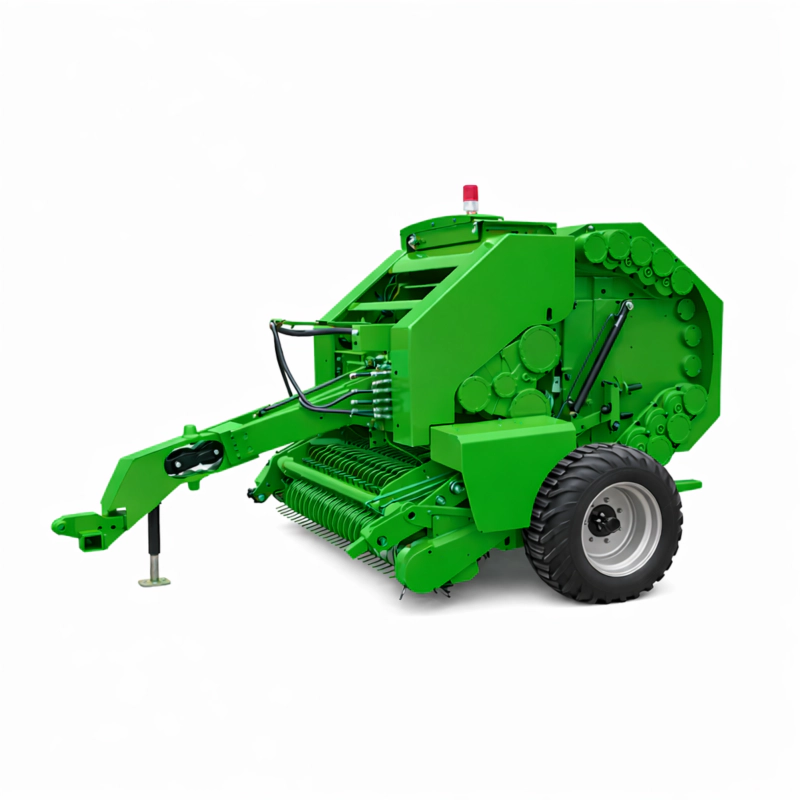
설명
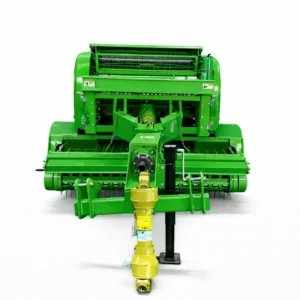
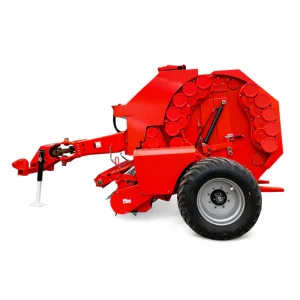
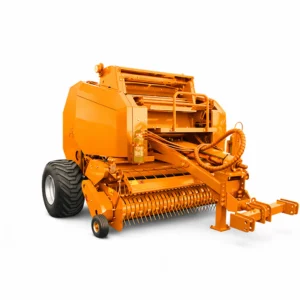
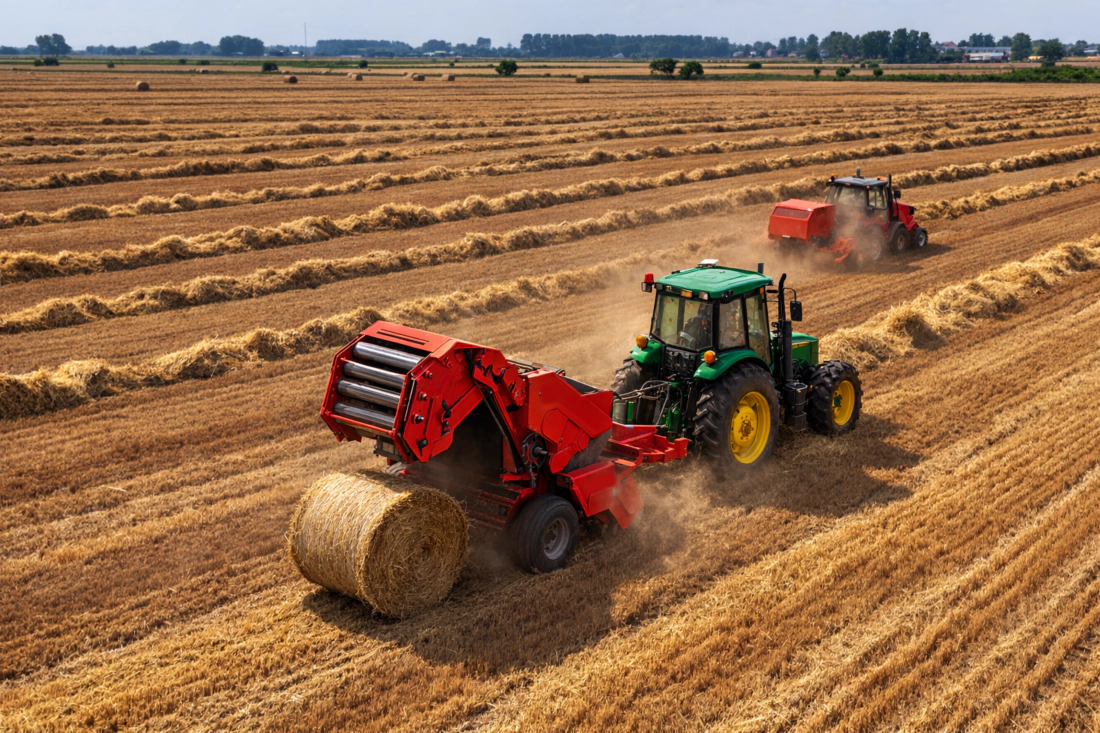
Let’s get straight to the iron and steel of it. When you’re out in the field racing the rain, the absolute last thing you need is a clogged pickup. As a direct factory manufacturer and your premium round hay baler supplier, we’ve built this specific machine to eat heavy windrows alive. It delivers unyielding bale density, incredibly low horsepower requirements, and near-zero downtime. Unlike flimsy gear churned out by generic manufacturers, our round hay balers are engineered for the brutally unforgiving real world—handling heavy wet silage, brittle dry straw, you name it, without skipping a beat.
We’ve been crawling under these machines for over 18 years, seeing exactly what fails when the pressure is on. Most printers don’t realize this, but paper-thin side panels and cheap bearings are the silent killers of forage packing equipment. The equipment we produce here in our Dutch facilities is born from a completely different philosophy. We oversize the driveline components. We reinforce the chamber walls. We use heavy-duty seamless belts that don’t stretch out after a single season of heavy alfalfa. In our experience, when you invest in heavy iron, it pays you back at the scales. The crop doesn’t wait, and neither should your machinery.
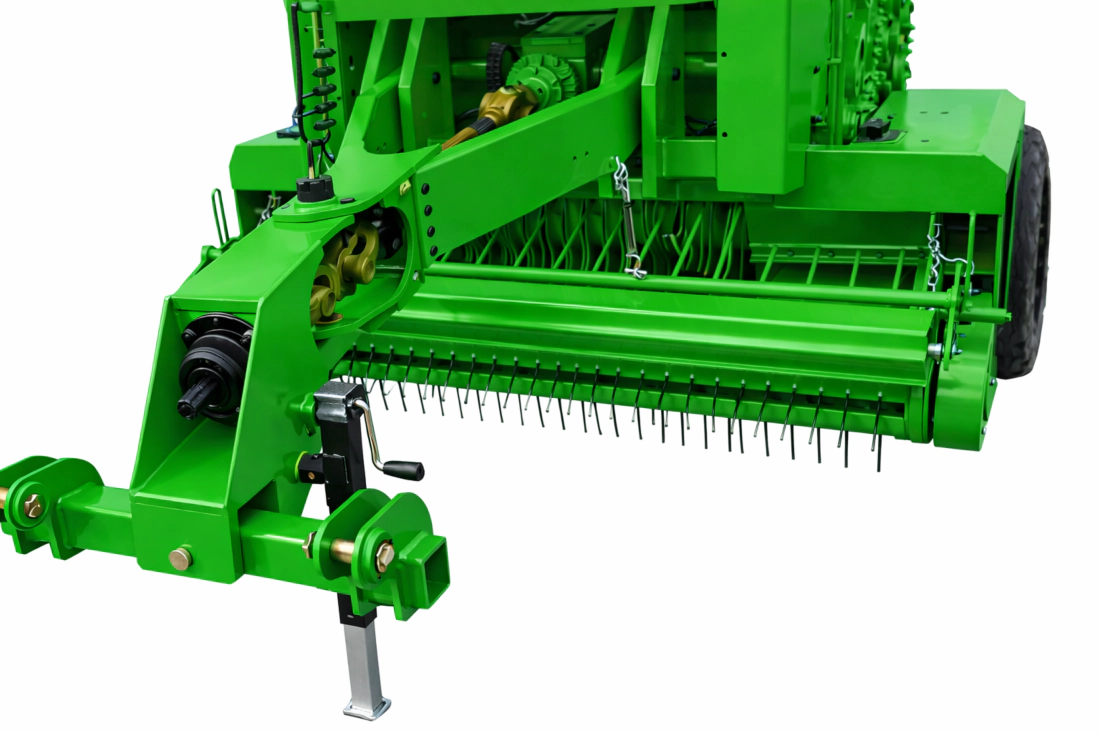
⚙️ Core Technical Specifications
We build our units to handle the absolute upper limits of agricultural demands. The exact configuration usually depends on your specific acreage and tractor setup (we do a lot of customization). Here are the standard baseline dimensions and capacities for our flagship series.
| 제품 모델: 9EP-1400 | 적정 출력: 110-150마력 |
| 구동 모드: PTO 출력 | 작업 속도: 6-12km/h |
| 베일 크기: 지름 1250mm * 길이 1400mm | 토양 함량: < 15% |
| 픽업 폭: 2200mm | 실행 표준: GB/T14290-2008 |
| 특허 번호: ZL 2017 2 0612476.X | 전체 크기(길이*너비*높이): 3.76m * 2.65m * 2.38m |
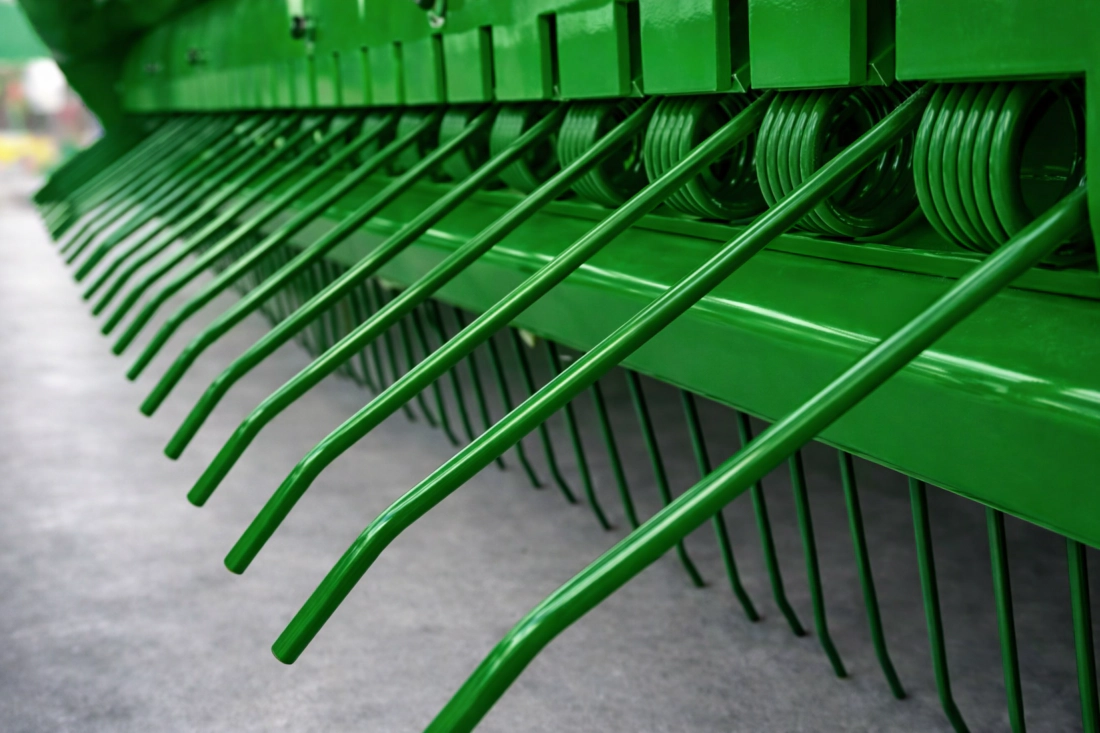
🚜 Unfair Field Advantages
There is a massive difference between a machine that just rolls hay and one that maximizes your crop’s nutritional value while saving diesel. We’ve seen farmers burn through thousands of dollars in wasted fuel simply because their older equipment requires too much rotational force. We engineered these specific advantages to solve the headaches we hear about every day.
1. The Hydraulic Drop-Floor System
Anyone who has spent two hours digging out a plugged rotor with a pocket knife in 90-degree heat knows this pain. The trick is our rapid-response hydraulic drop floor. If you pick up a damp lump and plug the intake, you simply drop the floor from the tractor cab, engage the PTO to clear it, lift the floor back up, and you’re moving again in under 15 seconds. It is a complete game-changer for daily productivity.
2. Camless Pickup Reel
Traditional cam-track pickups have dozens of moving parts, bearings, and followers that wear out fast in dusty conditions. We stripped all that away. Our camless design operates faster, sweeps the ground cleaner, and radically reduces maintenance costs. Fewer moving parts mean fewer things snapping mid-harvest. It is a beautiful piece of streamlined engineering.
3. Ultra-Dense Core Starting
A loose core ruins the bale—it allows oxygen in, causing spoilage in silage, and makes dry hay sag during transport. We utilize an aggressive ribbed roller setup at the front of the chamber. The second the crop hits the chamber, it’s forced into a tight, spinning core. This guarantees maximum dry matter compression from the very first handful of crop.
4. Automated Edge-to-Edge Net Wrapping
You lose up to 30% of your crop’s weather resistance if the net doesn’t cover the edges perfectly. Our dual-tension net wrap system spreads the mesh over the extreme edges of the bale (sometimes slightly over the edge depending on your net quality). It applies the net in a fraction of the time twine takes, saving you roughly 15 to 20 seconds per bale. Over a thousand bales, that’s serious time saved.
5. Centralized Greasing Banks
Let’s be honest, crawling around trying to find 35 different grease zerks hidden behind safety shields usually means half of them get skipped. We plumbed all the critical bearing lubrication lines into localized, easy-to-reach banks. You stand in one spot, hit the block with your grease gun, and you’ve serviced the hardest-working parts of the machine in three minutes.
6. Overbuilt Primary Drive Chains
When you are packing a 5×6 bale of high-moisture crop, the torque on the drive side is immense. We skip standard agricultural chains and use massive, heavy-duty industrial roller chains. We also integrate an automatic continuous oiling system that drips exactly the right amount of lube onto the chains while the PTO is running, drastically extending sprocket life.
🔍 How to Choose the Exact Right Model
Buying the wrong baler is an incredibly expensive mistake. We talk to folks every week who bought a massive variable chamber unit for a tiny 20-acre hobby farm, or conversely, tried to run wet silage through a light-duty dry-hay only machine. You need to match the tool to the exact parameters of your operation.
Think about your chamber type. Fixed chamber machines (using steel rollers) are practically bulletproof and are absolute beasts for wet, sticky silage. They create a star-shaped core that breathes a bit better, which some guys prefer. On the flip side, variable chamber machines (using belts) let you adjust the bale size from the cab. If you sell hay to horse owners who want smaller bales, but you also pack massive 6-footers for your own beef cattle, a variable chamber gives you that flexibility. You also have to realistically look at your tractor’s horsepower. Don’t look at engine HP; look at PTO HP. If our unit demands 80 PTO HP, and your older tractor produces exactly 80 on paper, you will be lugging the engine on the hills. Always build in a 15% horsepower buffer to keep your fuel economy in the green zone.
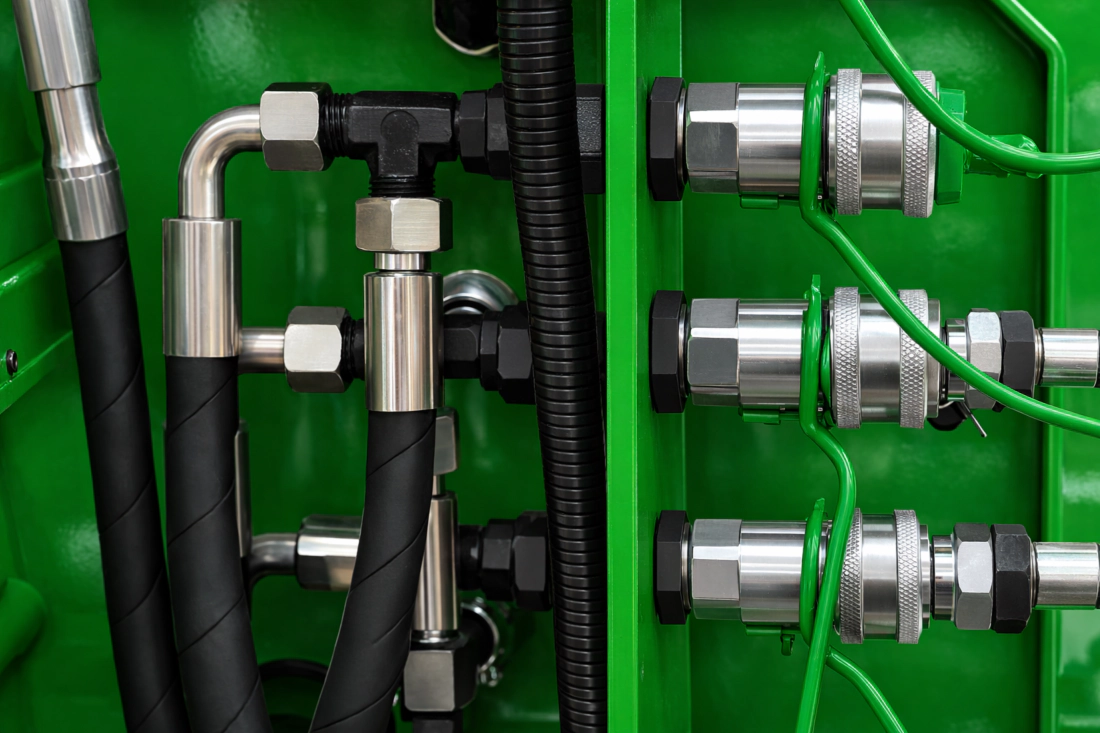
🌾 Real-World Applications
Our hay rolling machinery doesn’t sit in a showroom; it does the heavy lifting in some of the most demanding agricultural environments across the globe. The engineering tolerances we adhere to mean the equipment easily crosses over into different harvesting sectors.
In the dairy sector, nutritional value is everything. When baling alfalfa or clover, leaf loss is the enemy (the leaves hold all the protein). Our smooth pickup and controlled chamber rotation gently fold the crop, preserving those delicate leaves rather than shattering them. For the biomass and commercial straw markets, the priority shifts to sheer density. Transportation costs are astronomically high, so cramming maximum tonnage onto a flatbed trailer is the name of the game. We crank up the hydraulic density pressure, allowing operators to produce rock-solid straw bales that won’t squat or deform when stacked four-high in a barn. We even see our heavy-duty models being used to clean up corn stalks (stover) after the combine goes through. Corn stover is incredibly abrasive and tough on belts, but our reinforced chamber handles the stalk impact effortlessly.
💬 Voices from the Field (Verified Operator Feedback)
We don’t do fluffy marketing talk. We listen to the guys spending 14 hours a day in the tractor cab. Here is what they are actually saying about our iron.
“I’m running a custom harvesting crew out in West Texas, mostly coastal bermuda and sudangrass. The heat out here destroys weak belts. What got me sticking with Ever Power’s equipment is the endless belts they use. We’ve pushed almost 8,000 bales through the chamber this season in 100-degree heat, and the tracking is still dead center. No edge fraying. It just works.” — D. Miller, Commercial Hay Operator (Texas, USA)
“In County Cork, you get maybe a three-day window of dry weather before the rain comes back. We pack very heavy, high-moisture grass silage. My old generic baler would constantly slip the belts when the bale got over 4 feet, just couldn’t handle the wet weight. This drop-floor machine swallows the wet stuff without a single slip. The roller profile at the front grips the sloppy crop brilliantly.” — S. O’Connor, Dairy Farmer (Ireland)
“Wheat straw in Western Australia is like baling wire. It’s harsh on everything. We needed a manufacturer that didn’t skimp on the steel thickness. The side walls on this baler haven’t warped, and the camless pickup has saved us days of downtime. We used to replace cam bearings every season; now we just blow off the dust and keep driving.” — M. Henderson, Arable Farmer (Australia)
🔗 We Power the Whole Driveline: PTOs & Gearboxes
You can’t have a relentless forage packer without a driveline that can take massive shock loads. A baler is basically a giant torque trap. When that sheer pin hits its limit, the energy has to go somewhere. Because we are a comprehensive engineering facility, we don’t just assemble machines; we manufacture the heavy-duty PTO shafts, wide-angle joints (for those tight headland turns), and the main T-gearboxes that drive the whole system.
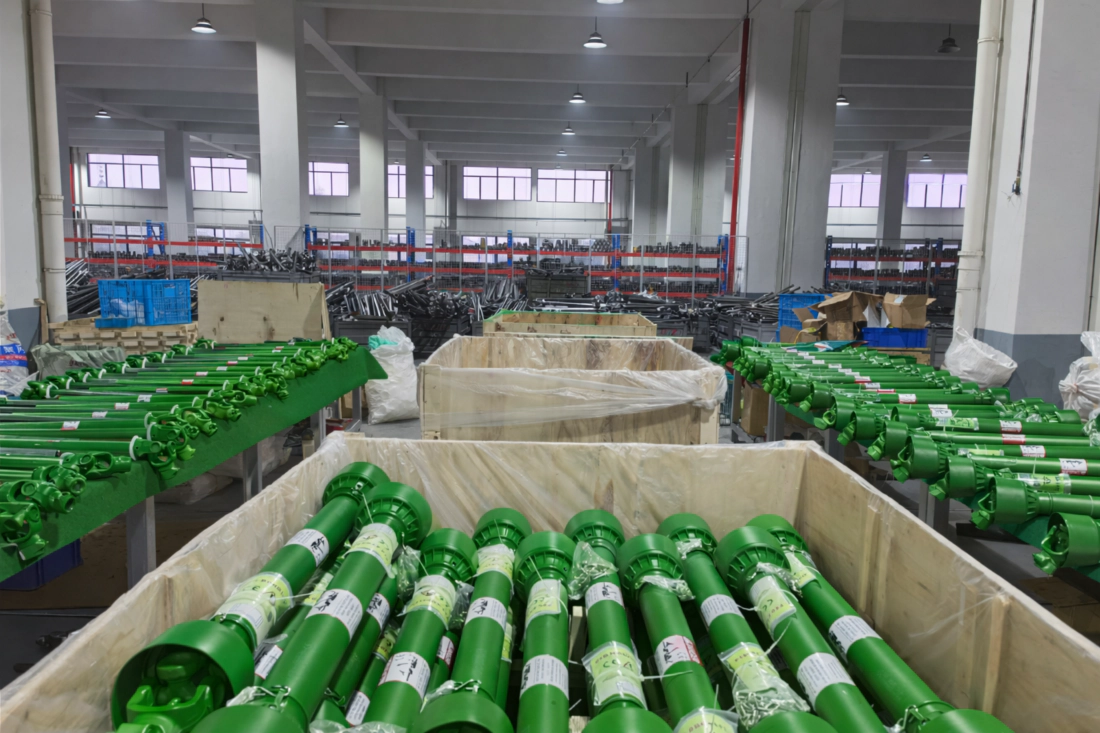
Most folks don’t realize that a poorly balanced PTO shaft will destroy your implement’s input bearings within a few seasons. We precision-balance every shaft. If you need replacement driveline components for your existing fleet, or if you are an OEM looking for reliable power transmission parts, we supply those direct from the factory too.
❓ The Master Mechanic’s FAQ
When the phone rings here at the factory, these are the common questions we get from operators trying to fine-tune their harvest.
Net wrap vs. Twine – which should I actually use?
In our experience, net wrap is worth the extra material cost every single time. It takes about 3 seconds to net a bale compared to 20+ seconds for twine. That saves diesel, saves tractor hours, and the bale sheds water 10 times better when stored outside. Twine is only recommended if you are storing 100% inside and have zero time constraints.
Why are my bales shaped like cones or barrels?
Usually, it’s a driving habit issue. If you have a barrel shape, you are driving directly down the center of a small windrow, starving the edges of the chamber. If it’s a cone, you are spending too much time on one side. The trick is weaving smoothly—feed the left side for a few seconds, cross over, feed the right side. Keep the bale monitor indicators even.
What happens if I shear a bolt during the pickup phase?
Don’t panic. The shear bolt is doing exactly what it was designed to do—protecting your gearbox from a massive shock load (usually from a rock or a sudden wad of heavy crop). Shut down the PTO, turn off the tractor, lock the brakes. Clear the blockage manually or with the drop floor, align the driveline holes, and drop in a new factory-spec shear bolt. Never replace it with a harder grade bolt, or you’ll rip the guts out of the gearbox.
🗣️ Conversational Direct Answers (Voice Search Optimized)
People ask very specific things when they are hunting for real commercial equipment. Here are the direct answers.
What is the exact price of a round hay baler for a mid-sized dairy farm supplier in Wisconsin?
The exact price depends on chamber type and accessories, but a custom heavy-duty silage round hay baler quote typically ranges from $35,000 to $55,000 directly from our manufacturing factory. Contact us for a precise, tailored quote without the middleman markup.
Where can I find custom round hay baler manufacturers that offer direct factory quotes for Australian wheat farmers?
Right here at Ever Power. We are a Dutch-based direct manufacturer that frequently exports heavy-duty, reinforced round baling machinery specifically customized to handle highly abrasive Australian wheat straw conditions. We handle global shipping and direct factory pricing.
How do I calculate the maintenance cost of a variable chamber round baler for high moisture silage operations?
To accurately calculate maintenance cost, factor in roughly $2 to $4 per bale. This includes net wrap cost, annual grease, chain oil, replacing pickup tines, and depreciating belt wear over 10,000 bales in acidic, high-moisture commercial silage environments.
Which high-density agricultural balers have the lowest PTO horsepower requirement for hilly farm terrain?
Our camless fixed-roller agricultural balers demand significantly lower PTO horsepower—often operating smoothly on just 75 to 85 HP tractors—making them exceptionally fuel-efficient and safer to maneuver across steep, hilly farm terrain without engine lugging.
When should I replace the seamless belts on my forage packing equipment to prevent field breakdowns?
You should replace the seamless belts on your forage packing equipment when you observe deep structural cracking reaching the fabric ply, severe edge fraying, or after approximately 12,000 to 15,000 bales, ensuring you never face catastrophic mid-harvest breakdowns.
Stop Fighting Your Equipment. Start Packing Better Bales.
Let us configure a machine that matches your crop, your tractor, and your tough conditions. We build the iron that does the work.