Sourcing an efficient heavy-duty round farm baler directly from an authentic factory ensures unparalleled structural reliability and maximizes your seasonal field output. As an elite agricultural machinery manufacturer and a globally trusted round farm baler supplier, Ever Power Netherlands designs customized harvesting configurations built to handle wet, dense crop conditions. In our experience, learning how to quickly troubleshoot hydraulic leaks on your round farm baler is the absolute key to keeping your equipment running smoothly during peak harvest week. Most operators don’t realize that a tiny, weeping fluid leak under the side shields can mask severe pressure drop problems inside your automated density circuit, leading to soft-shouldered bales, malfunctioning tailgate latch locks, and catastrophic downtime risks that quietly drain away your hard-earned seasonal profit margins.
🟢 Pressure Under Fire: An Application Engineer’s Overview of Hydraulic Systems
Over my eighteen years diagnosing mechanical failures on assembly floors and standing in dusty, hot fields with custom harvesting crews, I’ve seen thousands of hydraulic lines blow apart mid-day. When you are rushing to clear a thick field of dry straw or green alfalfa before a massive thunderstorm rolls in, your tractor’s hydraulic remote lines are working under continuous, punishing pressures. A modern, high-capacity presse à balles rondes relies heavily on a complex network of oil lines, dual-acting cylinders, and relief valves to lock the tailgate tightly and compress raw forage into dense, uniform packages. If the fluid pressure drops even ten percent because of an invisible pinhole leak or a worn O-ring, the entire packing cycle falls into absolute chaos.
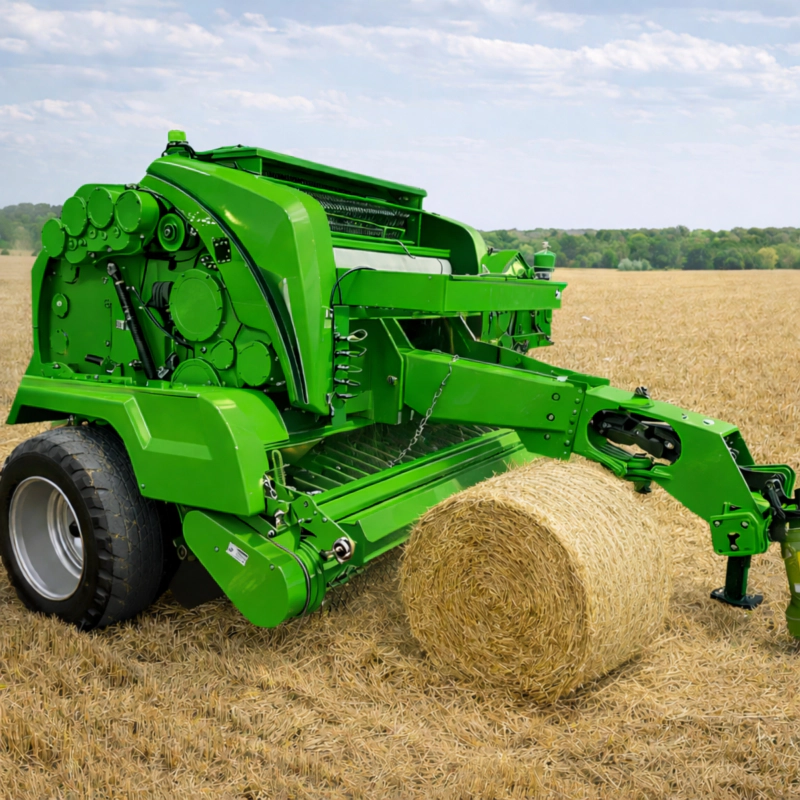
The primary advantage of selecting our latest heavy-duty machinery line is its highly optimized open-architecture hydraulic layout. We’ve purposely engineered our routing channels to keep hoses protected from flying crop debris while remaining fully visible during routine pre-flight inspections. The trick is knowing exactly where to look when the in-cab density monitor start fluctuate. You shouldn’t wait until a hose completely bursts and covers your pristine field in hot, smoking mineral oil—and trust me, cleaning hydraulic fluid out of a caked pickup throat is a nightmare no one wants to experience! By understanding the core mechanical junctions and checking fluid behaviors under load, you turn a potential multi-thousand-dollar field failure into a quick, five-minute seal swap.
📊 Technical Baselines & Hydraulic Flow Specifications
Most operators don’t realize how much the technical specs of their hydraulic network dictate the structural density of the finished bale. When you compress high-moisture silage crops, the internal core force pushes outward against the tailgate cylinders, spiking fluid line pressure way past standard hay bounds. To help you trace system metrics and isolate fluid spikes safely, our factory engineering group has compiled the true performance parameters across our primary commercial model families below.
| Classe de modèles de presses à balles | Style de chambre et cible dimensionnelle | Max Fluid Relief Valve Pressure | Cylinder Bore & Stroke Configuration | Investissement de base estimé (USD) |
|---|---|---|---|---|
| Compact Utility Master 870 | Rouleau fixe en alliage (0,6 m x 0,7 m) | 160 bars (2320 PSI) | 50mm Bore x 300mm Stroke Dual Cylinders | $6,800 – $11,500 |
| Champ standard commercial 1212 | Rouleau fixe lourd (1,2 m x 1,2 m) | 200 bars (2900 PSI) Proportionnel | 70mm Bore x 450mm Stroke High-Tensile Rams | $19,500 – $33,000 |
| Spécialiste en ensilage lourd | Noyau fixe à rouleaux solides (1,2 m x 1,5 m) | Équilibrage automatique 230 bars (3335 PSI) | 80mm Bore x 500mm Stroke Viton-Sealed Cylinders | $37,500 – $56,500 |
| Maître de courroie variable industrielle | Chambre à courroie variable (jusqu'à 1,8 m) | Circuit double de 250 bars (3625 PSI) | Multi-Stage Proportional Belt Tensioning Logic | $59,000 – $91,500 |
*Note: These parameters are based on standard Ever Power crop testing (dry hay at ~14% moisture, silage at ~55% moisture). Regional crop elasticity and stem toughness will slightly alter blade pressure and tension requirements.*
⭐ 6 Engineering Milestones That Guarantee Total Hydraulic Control
In my near-two decades of structural agricultural engineering, I’ve torn down competing generic machines from top to bottom. Cheap balers use thin-walled rubber hoses with basic zinc-plated crimps that expand under intense core pack pressures, leading to catastrophic splitting in record time. At Ever Power, we eliminate those weak engineering layouts entirely. Here is exactly why our high-durability platforms handle extreme hydraulic stress effortlessly:
Circuits proportionnels gauche/droite indépendants
We route completely separate hydraulic lines to each tailgate latch. If one side experiences sudden high-torsion resistance, our balancing block auto-compensates fluid volume instantly.
Steel braided High-Pressure Lines
Instead of cheap, unreinforced hoses, our internal circuits utilize four-spiral steel wire braided conduits designed to comfortably absorb continuous pressure spikes up to 400 Bar.
Bielles de cylindre chromées trempées par induction
Nos vérins hydrauliques robustes sont dotés de joints Viton à double lèvre et d'arbres chromés durs qui évacuent facilement la poussière abrasive des récoltes, empêchant complètement les suintements internes des joints pendant le fonctionnement.
Réglage proportionnel de la pression en cabine
Plus besoin de manipuler manuellement les vannes sur le timon de la machine. Notre bloc électronique vous permet de recalibrer la densité du noyau en temps réel, directement depuis le tableau de bord numérique de votre tracteur.
Integrated Block Thermal Relief Valves
When ambient temperatures soar past 100°F, trapped fluid expands rapidly. Our custom valve blocks vent microscopic fluid volumes safely back to the reservoir to avoid hose structural swelling.
Ingénierie sur mesure directe aux Pays-Bas
Because we operate a vertically integrated round farm baler factory, we customize mechanical compression profiles, hydraulic layouts, and fitting styles to perfectly match your tractor fleet.
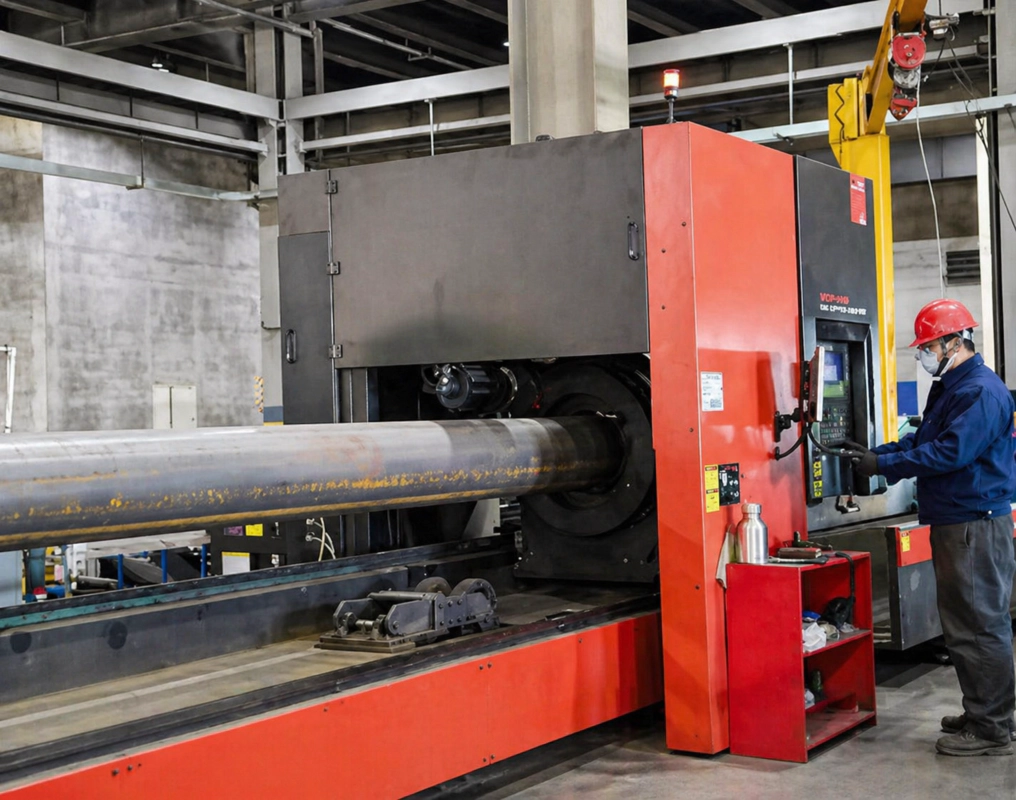
🤔 The Master’s Field Guide: Sizing Your Setup and Pinpointing Leak Triggers
Here’s a dose of cold, hard engineering reality: ninety percent of the fluid leaks that leave operators stranded in a field aren’t caused by a factory defect. They are triggered by incorrect tractor flow settings, loose fitting rings, or abrasive crop rubbing that owners completely ignore until the line splits. If you run your tractor’s hydraulic remote valves at maximum continuous flow while pulling a fixed chamber baler, you are continuously forcing high-velocity oil against the internal relief valves, generating intense, parasitic heat that rapidly degrades your hose liners.
When choosing a machine to avoid these constant pressure headaches, you must evaluate your predominant crop moisture profile alongside your tractor’s actual PTO horsepower authority. If you are a family farmer putting up 300 to 500 bales of dry meadow hay annually, our compact fixed-chamber model utilizing mechanical tension springs will keep your operation blissfully simple and completely free of oil hose worries. On the flip side, if you are a high-volume custom contractor dealing with heavy, wet clover silage, you absolutely must step up to our Variable Master Pro utilizing independent proportional hydraulic loops. Sizing the hardware correctly to your physical acreage demands and tractor fluid capability is how real field profitability is secured.
🌿 Field Applications: Navigating Structural Stress and Fluid Demands
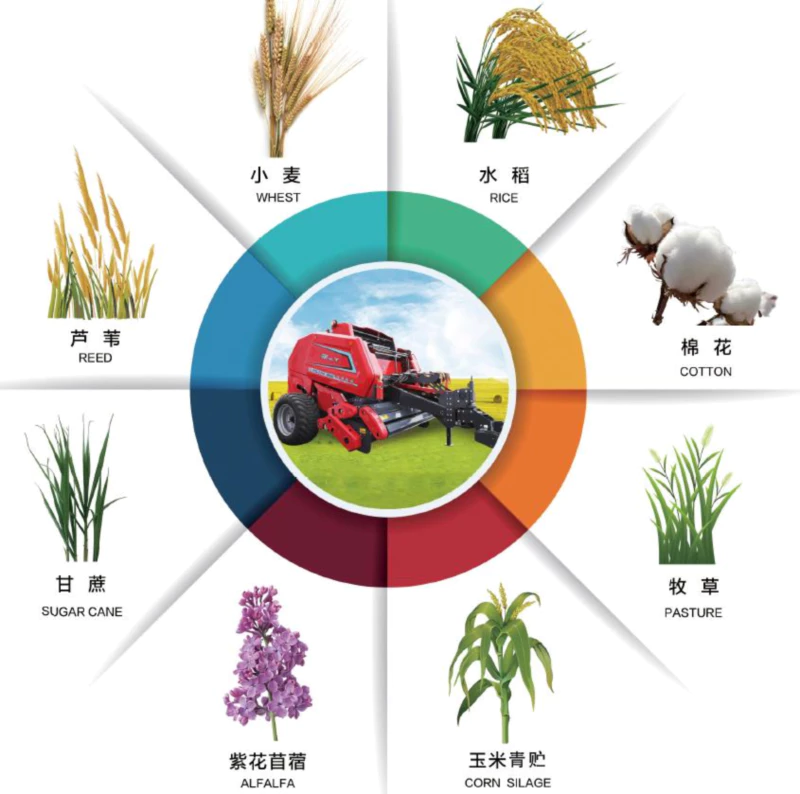
The physical behavior of agricultural forage shifts completely across the harvesting calendar, altering the internal friction profiles inside your rolling chamber. Dry wheat straw is highly springy, light, and carries massive structural memory; it requires intense physical compaction pressure at the tailgate locks to force it into a dense package that won’t expand after ejection. High-moisture grass silage, conversely, behaves like wet clay. It packs tightly with very little compaction pressure, but its immense weight places brutal torsional shock loads on your drive rollers and sprockets.
Our dual-crop machinery lines utilize a high-inertia flywheel driveline that perfectly smooths out these contrasting application profiles. When sweeping up a light, rapid windrow of dry barley straw, our wide pickup convergence augers guide the material evenly into the throat shoulders, avoiding the hollow center defects that cause lopsided bale formation. When moving into thick, sticky alfalfa silage, you simply engage our integrated pre-cutter knife cassettes, slicing the wet stalks down to uniform 2-inch segments. Slicing reduces the internal mechanical friction drag inside the chamber, effectively lowering your hydraulic pressure spikes and protecting your fluid lines from stress-related splitting.
🗣️ Retours d'expérience concrets : des témoignages de producteurs actifs du monde entier
Je répète chaque jour à notre équipe de production que la véritable validation des machines ne se fait pas dans nos ateliers climatisés et impeccables ; elle se révèle lorsqu'un opérateur pousse sa machine à ses limites sous un ciel qui s'assombrit. Nous entretenons une communication étroite et personnalisée avec nos sous-traitants du monde entier afin de garantir que nos installations sur mesure s'adaptent parfaitement aux conditions locales.
“We clear massive wheat straw acreage down here in Texas, where the summer heat regularly passes 105°F. Our older generic baler would constantly blow hydraulic seals on the tailgate because the fluid would overheat in the single-circuit block. We switched to the Ever Power standard commercial series last season. Their integrated thermal relief valves and steel wire braided hoses have completely solved our leak issues. Fired it up this spring, and the in-cab display kept density rock steady all day without a single weep.”
— Austin Vance, entrepreneur en fourrage sur mesure (Waco, Texas, États-Unis)
“Our challenge here in Cork, Ireland is a nearly constant dampness. Putting up high-moisture silage ryegrass means our hydraulic cylinders are working under maximum load cycles every single minute. Slicing the wet forage with the knife rotor gives us spectacular core density, but it tests the tailgate seals brutally. The chrome plating on the Ever Power cylinders has been totally immune to acidic silage juices. No fluid leaks or tailgate creep over three full seasons.”
— Tadhg Murphy, producteur de produits laitiers et de viande bovine (Cork, Irlande)
🛠️ Approvisionnement en composants de qualité supérieure : vérins hydrauliques haute performance, réducteurs en fonte et arbres de précision
Let’s address a hard operational reality: every single harvesting implement working under continuous torsional friction will eventually require wear component replacements. It’s simple physics—metal moving against stiff plant fibers day after day. A lot of generic internet suppliers will sell you a machine and completely vanish when you need a replacement hydraulic ram or a custom gear set, leaving you stranded for weeks mid-season. We refuse to operate that way. Because we manage a fully vertical component engineering plant at Ever Power, we provide direct factory access to premium hydraulic cylinders, high-torque right-angle gearboxes, hardened pick-up tines, and heavy-duty drive sprockets.
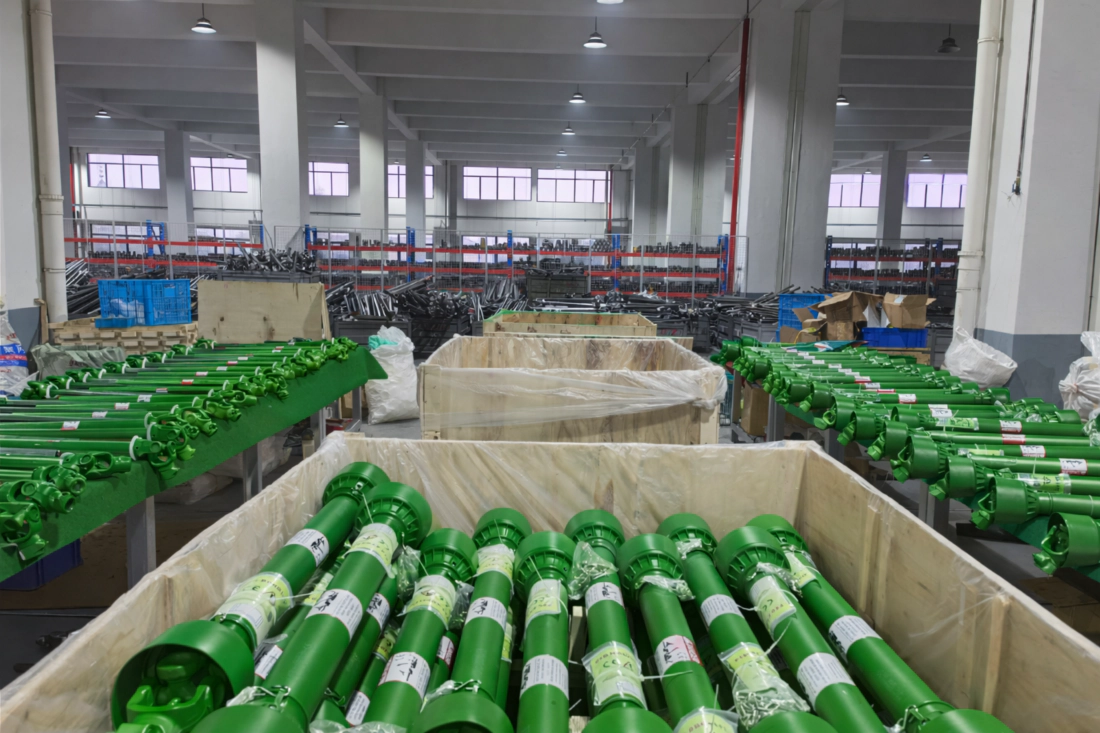
Nos vérins hydrauliques à double effet exclusifs sont dotés d'arbres chromés trempés par induction avec joints Viton à double lèvre, garantissant une étanchéité parfaite et une absence totale de perte de charge, même lors de la manutention de lourds sacs d'ensilage vert de 1 134 kg (2 500 livres). Nos principaux réducteurs de puissance utilisent des carters robustes en fonte et des engrenages hélicoïdaux immergés dans l'huile, assurant un fonctionnement à température optimale même sous fortes charges continues. Découvrez notre savoir-faire en ingénierie directement sur notre site web. à propos de nous ou retournez à notre page principale page d'accueil pour consulter notre plan de fabrication complet.
❓ Frequently Asked Questions Regarding Hydraulic Troubleshooting and Equipment Sourcing
Au cours de ma longue carrière d'ingénieur, j'ai répondu à presque toutes les questions mécaniques et financières imaginables. Afin de vous faire gagner un temps précieux, j'ai compilé les questions les plus fréquemment posées par les agriculteurs souhaitant optimiser le rendement de leurs cultures.
Combien coûte une presse à balles rondes commerciale auprès d'un fournisseur direct d'usine authentique en Europe ?
Une presse à balles rondes fiable pour le foin commercial représente généralement un investissement de 19 500 à 56 500 £ lorsqu'elle est achetée directement auprès d'un fabricant expérimenté. En vous approvisionnant directement, vous éliminez les marges importantes des intermédiaires et permettez à notre équipe d'ingénieurs de personnaliser les rouleaux de la chambre en fonction de la densité de votre récolte.
Quel est le coût estimatif de base d'une mini-presse à balles rondes automatique pour les applications forestières à petite échelle au Texas ?
Le prix estimatif d'une mini-presse à balles rondes automatique de qualité industrielle varie de 6 800 à 11 500 £ (prix direct usine). Conçues pour les petites exploitations ou les vergers denses, ces presses compactes à rouleaux fixes offrent une compression exceptionnelle du noyau sans nécessiter d'investissements importants en puissance de tracteur.
Quelles sont les directives de prix spécifiques pour les presses à balles rondes à chambre variable qui correspondent aux exigences de production d'ensilage intensif ?
Le prix des presses à balles rondes à chambre variable commerciales se situe entre $45 000 et $91 500 selon la configuration souhaitée. Pour les applications d'ensilage à haut volume, nous recommandons vivement nos modèles à courroie sans fin renforcée, équipés de vannes d'équilibrage hydrauliques indépendantes gauche-droite pour une uniformité structurelle optimale.
Stop Letting Fluid Pressure Leaks Dictate Your Daily Field Harvest Speeds
Don’t let fluid weepage or sagging tailgate locks ruin your packing density curves or blow apart hoses mid-day. Connect directly with our application engineers in the Netherlands to configure a heavy-duty platform built for absolute mechanical precision.


