
🌾 Sourcing a heavy-duty round farm baler from an authentic factory ensures absolute field reliability and dense, perfectly shaped outputs every single time. As a premier round farm baler manufacturer and globally trusted custom equipment supplier, Ever Power designs highly calibrated implements directly at our Netherlands headquarters to eliminate common harvesting headaches. In our experience, diagnosing the structural flaws behind lopsided packages is essential for preserving structural integrity and keeping your transport logistics cost-effective. Most operators don’t realize that running a poorly configured machine down uneven windrows is a surefire recipe for asymmetric chamber loading, which causes excessive friction, slipping belts, and premature mechanical wear on your driveline. The trick is deploying a system built for automated density regulation.
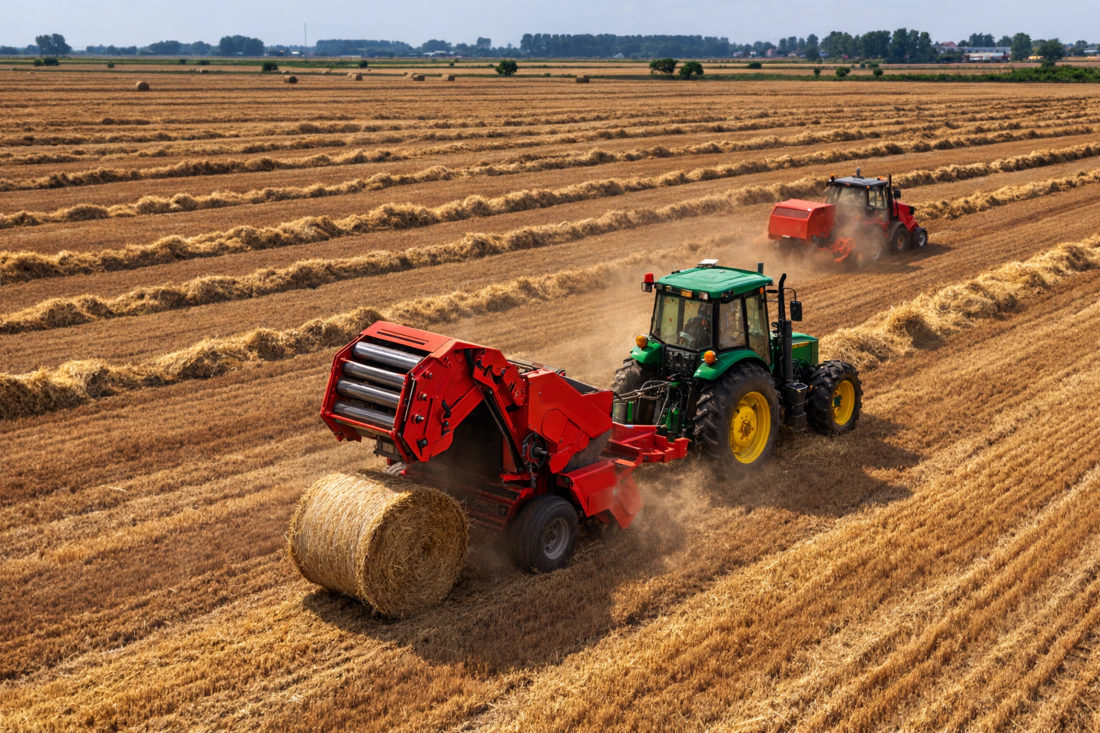
🟢 Deconstructing the Asymmetry: An Engineering Overview of Chamber Dynamics
Over my 18 years spending long days on manufacturing assembly floors and standing in dusty fields with custom contractors, I’ve seen thousands of look-alike barrel-shaped or lopsided packages dumped out of tailgates. It’s an incredibly frustrating sight. A lopsided bale isn’t just an aesthetic annoyance; it’s a mechanical disaster waiting to happen. Asymmetric packages lean precariously on flatbed trailers, snap stretch wrap during silage preparation, and cause uneven stack pressure that can bring a whole barn wall tumbling down. We’ve seen entire harvest schedules ruined because an operator failed to understand that the physics inside a spinning chamber require perfectly distributed material input.
The primary advantage of deploying a modern, high-performance round baler lies in its advanced chamber architecture and active throat feeding systems. Our dual-moisture platforms are engineered precisely to combat the typical field variables that cause uneven outputs. By incorporating heavy-walled steel rollers, aggressive cross-cut feed rotors, and independent left-to-right hydraulic tension circuits, we ensure that every windrow—regardless of how poorly raked or lopsided it enters the pickup—is compressed evenly from the core to the outer wrap. The ultimate purpose of this machine is to deliver perfect structural uniformity, maximizing dry matter preservation and minimizing transport losses over long-haul routes.
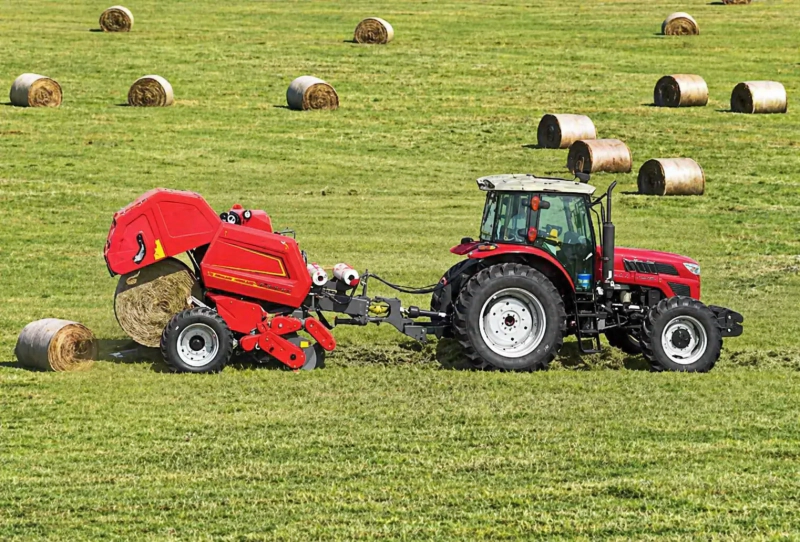
📊 Technical Parameters & Multi-Crop Chamber Specifications
Most operators don’t realize how much the physical dimensions and structural weight distribution of the internal rollers govern bale uniformity. When a chamber suffers from asymmetric hydraulic pressure or uneven crop feeding, the internal stresses warp components. Below, I’ve laid out the technical blueprints and pressure ratings across our customized product classes to show you exactly how we prevent structural twisting.
| Baler Model Class | Chamber Style & Core Specs | Density Control Circuit | Pickup Width & Tine Layout | Est. Direct Investment (USD) |
|---|---|---|---|---|
| Compact Field Master 870 | Fixed Solid Roller (0.6m x 0.7m) | Mechanical Dual Tension Springs | 1.3m Wide, Camless Closed Tines | $6,800 – $11,500 |
| Standard Commercial 1212 | Heavy Fixed Roller (1.2m x 1.2m) | Dual-Cylinder Hydraulic Proportional | 1.9m Wide, Active Clean-Sweep | $19,500 – $33,000 |
| Heavy-Duty Silage Cutter Pro | Reinforced Roller Fixed (1.2m x 1.5m) | Auto-Compensating Hyd. Core Valve | 2.1m Wide with Integrated Feed Augers | $38,000 – $57,500 |
| Industrial Variable Belt Master | Endless Rubber Belt Var. (Up to 1.8m) | Independent Left/Right Proportional Valves | 2.3m Wide Full ISOBUS Digital Tracking | $59,000 – $91,000 |
⭐ 6 Engineering Advantages That Eliminate Lopsided Bales Completely
In my near-two decades of structural farm implement engineering, I’ve broken down competing generic machines from top to bottom. Cheap balers utilize single-circuit hydraulic lines that apply identical fluid force to both tailgate latch locks regardless of left-to-right internal variation. At Ever Power, we eliminate those weak engineering choices completely. Here is exactly how our machinery layout avoids asymmetric deformation over years of tough use:
Independent Tailgate Hydraulic Circuits
We mount separate hydraulic sensors on each side of the frame. If one side fills faster, the matching cylinder instantly scales up hydraulic flow to prevent lopsided core distortion.
Forged Alloy Solid Chamber Rollers
Instead of thin welded tubes that flex when crop builds heavily on one side, our fixed chambers utilize thick-walled forged alloy barrels with straight-through drive spindles.
Real-Time Digital Cab Guidance Controls
No more guessing your field tracking path. Our intuitive ISOBUS display utilizes precise bar graphs to tell you exactly which side of the pickup throat needs more crop volume.
Oversized Dual-Side Feeding Augers
To smooth out ragged windrows, our wide pickup reels combine aggressive spring tines with high-clearance convergence augers that force crop securely into the extreme edges.
Pre-Stretched Heavy Diamond Chains
Uneven loading creates massive torque spikes on your drive system. We route all primary power through heavy-duty industrial diamond chains running inside continuous oil bath casings.
Direct Netherlands Custom Fabrication
Because we operate a vertically integrated round farm baler factory, we customize mechanical compression profiles, hydraulic layouts, and tooth shapes to match your local fields.
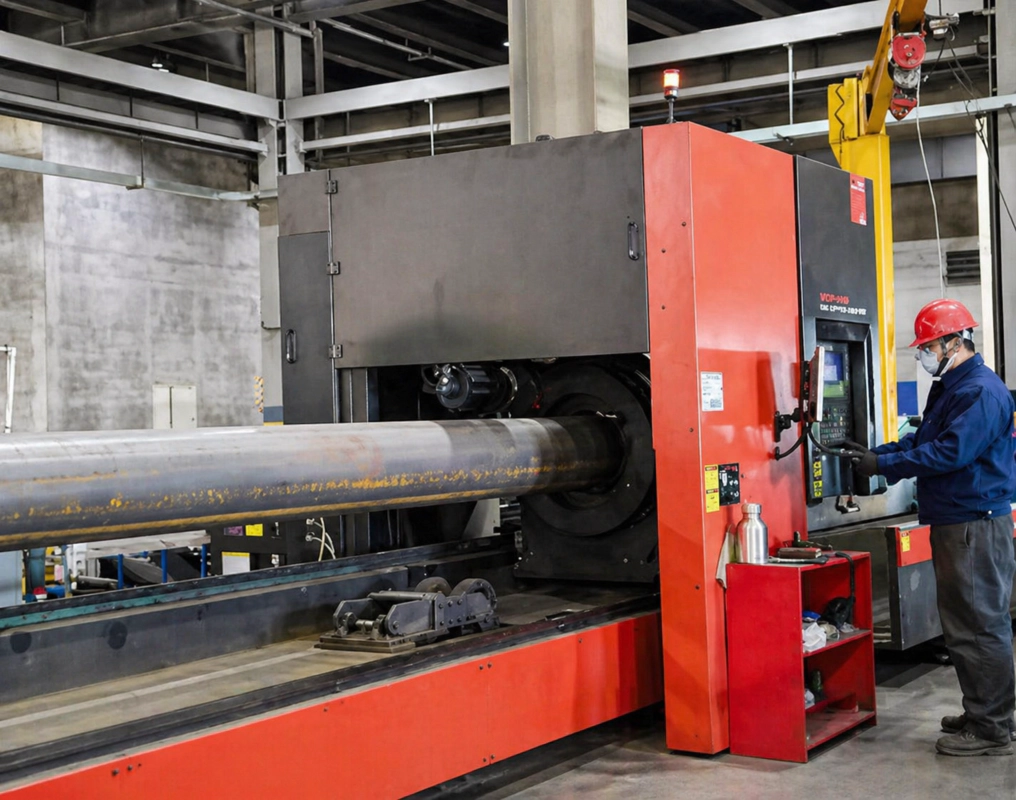
🤔 Troubleshooting Asymmetry: The Top 7 Field Causes and Solutions
Here’s a hard engineering reality: 90% of the lopsided packages dropped in fields aren’t caused by a major component break. They are caused by bad driving patterns, poorly raked windrows, or uneven wear that operators completely overlook until it’s too late. Let’s break down the real mechanical and operational triggers behind asymmetric bale formation:
First, driving straight down a narrow windrow forces all the crop directly into the center of the pickup throat, leaving the edges completely starved. The core rolls up tightly, but the outer shoulders remain loose and squishy, creating a barrel profile that slides around during flatbed transport. The trick is to weave your tractor gently in an ‘S’ pattern across the windrow every ten to fifteen seconds to feed both sides of the chamber evenly. Second, light, fluffy crop variations can cause uneven resistance on the variable chamber rubber belts. If your belt tension cylinders have slight internal seal weepage, one side of the tension arm will bleed down under load, causing a severe lopsided slope across the bale face.
Third, mismatched ground speed relative to a dense windrow causes the pickup reel to chop the material unevenly before it enters the rotor throat. Fourth, bent spring tines on one side of the pickup mechanism create a localized dead zone where crop drags along the dirt instead of flowing cleanly into the feed augers. Fifth, unequal grease distribution inside your main roller bearings creates asymmetric friction drag, slowing down the rollers on one side of the fixed chamber. Sixth, mismatched tire pressures on your baler chassis cause the entire machine to run at a slight lean, altering how gravity drops material onto the starter rollers. Seventh, worn tying knives leave ragged net tails that get caught unevenly on the chamber walls, pulling wrap tighter on one edge during ejection.
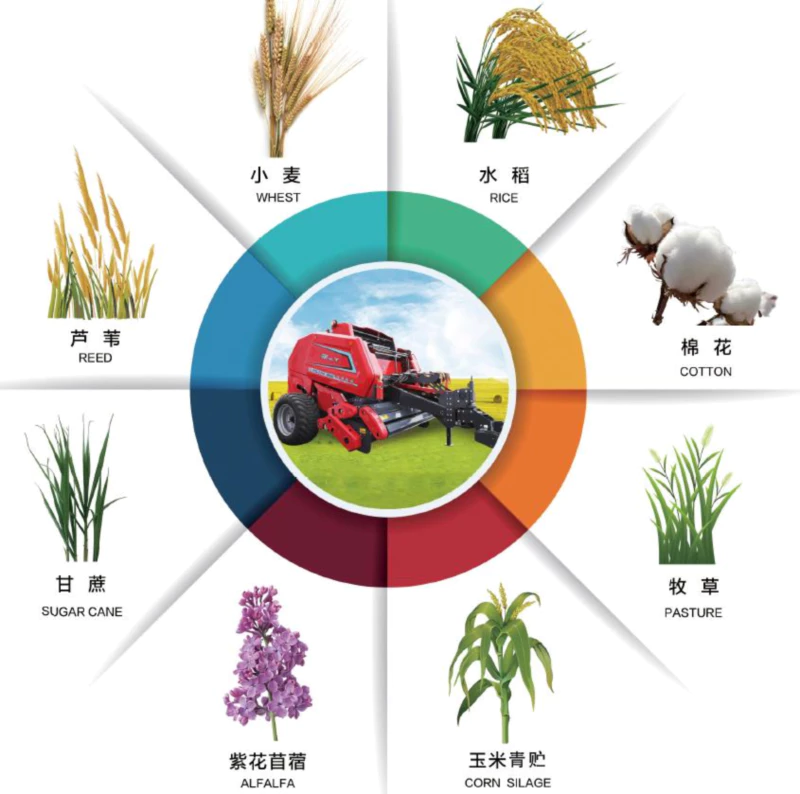
🌿 Field Applications: Versatile Crop Density and Moisture Compensation
The physical texture of your crop changes completely based on field moisture content. Brittle wheat straw behaves like light fluff; it has zero natural adhesion and requires maximum internal core pressure to stay uniform. High-moisture ryegrass silage, conversely, acts like sticky clay inside the rolling chamber. It exerts immense, heavy load spikes on your main rollers and requires aggressive scraper bars to prevent crop wrapping.
Our dual-moisture round balers incorporate a high-inertia flywheel driveline that smooths out these contrasting application profiles. When sweeping up light, fluffy barley straw, our wide pickup convergence augers smoothly funnel the springy stems into the chamber edges, avoiding the classic hollow-shoulder breakdown. When moving into thick, sticky alfalfa silage, our integrated knife rotor pre-slices the green crop, ensuring a uniform mass density distribution regardless of how unevenly the rakes left the windrows. This extreme versatility turns your implement into a true multi-season asset.
🗣️ Grounded Field Feedback: Voices from the Global Farming Fleet
I always emphasize that real mechanical engineering isn’t validated on our clean, air-conditioned assembly floor—it’s proved when an operator is pushing their iron to the limit under an incoming storm. We stay in close communication with commercial growers globally to ensure our engineering adjustments handle localized field conditions perfectly.
“Our main challenge down here in Texas is baling slick coastal bermuda under extreme heat. Our old belt baler would constantly produce lopsided rolls because the dry hay would slide to one side of the chamber. We upgraded to the Ever Power standard commercial series last season. The in-cab monitor bar graphs completely took the guessing out of our driving paths, and the dual hydraulic cylinders keep the core density dead even. Our transport flatbeds haven’t had a single tilting load since.”
— Austin Vance, Custom Forage Contractor (Waco, Texas, USA)
“We harvest heavy, wet grass silage up in Bavaria, Germany, where the terrain is rolling and fields are rarely flat. Running a standard implement meant constant lopsided packages because gravity drags the wet crop downhill inside the chamber. The independent hydraulic circuits on this Ever Power fixed-roller machine auto-compensate perfectly on side hills. Slicing the wet forage with the knife rotor gives us incredible core density and uniform packages every time.”
— Dieter Schmidt, Dairy Farm Operator (Bavaria, Germany)
⚙️ Premium Component Sourcing: Heavy Duty Hydraulic Cylinders, Cast Gearboxes, and Precision Shafts
Let’s address a hard operational reality: every single harvesting implement working under continuous torsional friction will eventually require wear component replacements. It’s simple physics—metal moving against stiff plant fibers day after day. A lot of generic internet suppliers will sell you a machine and completely vanish when you need a replacement hydraulic ram or a custom gear set, leaving you stranded for weeks mid-season. We refuse to operate that way. Because we manage a fully vertical component engineering plant at Ever Power, we provide direct factory access to premium hydraulic cylinders, high-torque right-angle gearboxes, hardened pick-up tines, and heavy-duty drive sprockets.
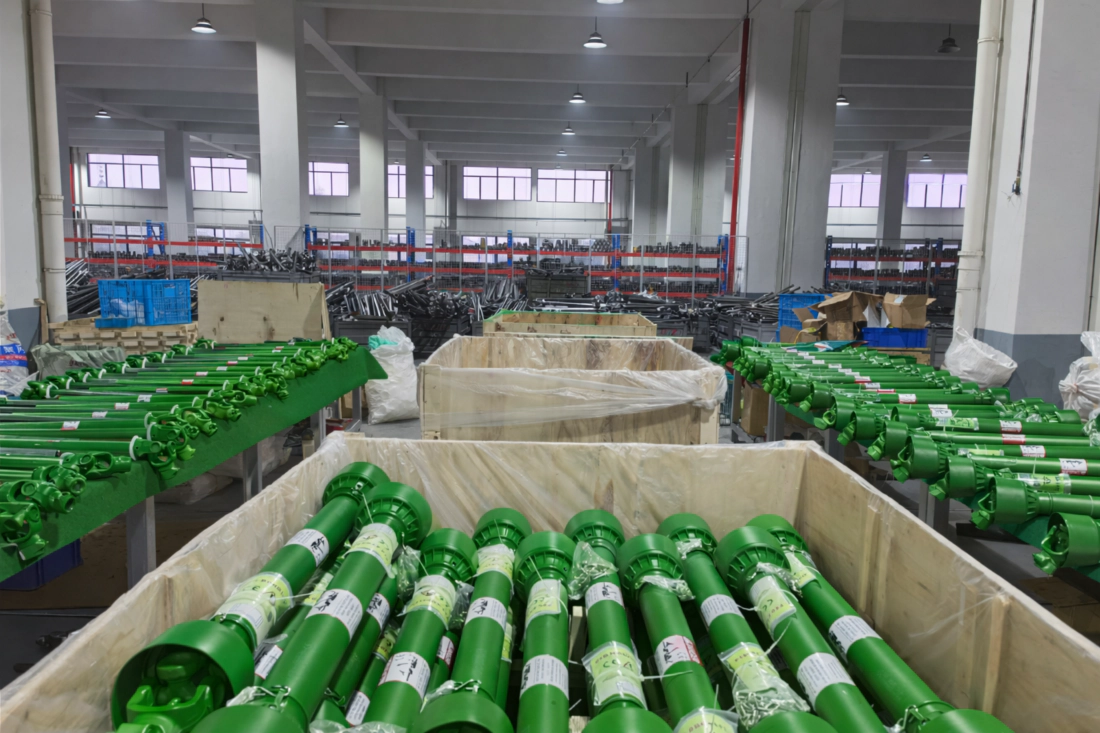
Our proprietary dual-acting hydraulic rams feature induction-hardened chrome shafts with double-lip viton seals, guaranteeing zero fluid weepage or core pressure drop even when handling heavy 2,500-pound green silage packs. Our main power transfer gearboxes feature robust cast-iron housings and oil-immersed helical gears that run completely cool under high continuous load constraints. You can explore our engineering heritage directly on our about us page, or return to our main home page to browse our complete manufacturing blueprint.
❓ Frequently Asked Questions Regarding Bale Uniformity and Equipment Sourcing
Over my long engineering career, I’ve answered nearly every mechanical and financial question you could imagine. To save you precious research time, I’ve compiled the absolute most common inquiries we receive from growers looking to optimize their field performance.
How much does a commercial round hay baler cost from an authentic direct factory supplier in Europe?
A dependable commercial round hay baler typically requires an investment between $19,500 and $57,500 when purchased directly from an experienced factory supplier. Sourcing your equipment direct eliminates steep retail middleman markups and allows our engineering team to customize the chamber rollers to suit your specific crop densities.
What is the baseline automatic mini round baler cost estimate for small-scale forestry applications in Texas?
An industrial-grade automatic mini round baler cost estimate ranges from $6,800 to $11,500 direct from our manufacturing plant. For small-scale operations or tight timber rows, these fixed-roller compact units deliver exceptional core compression without requiring massive tractor horsepower investments.
Which specific variable chamber round baler price guidelines match heavy duty silage production demands?
Commercial variable chamber round baler price guidelines range between $45,000 and $91,000 depending on your required configuration. For high-volume silage applications, we strongly recommend choosing our reinforced endless belt variants outfitted with independent left-to-right hydraulic balancing valves to ensure flawless structural uniformity.
Stop Wasting Truck Space and Spoilage Film on Misshapen, Loose Bales
Don’t let uneven windrows dictate your shipping efficiency or mechanical wear. Connect directly with our application engineers in the Netherlands to configure a heavy-duty platform built for absolute structural uniformity.


